
Tableware is the general term for the items used to serve, present, eat, and drink food and beverages. It includes the plates placed at each setting, the utensils used during a meal, the glasses used for drinks, and the larger pieces used to carry food from the kitchen to the table.
The term is broader than “dinnerware.” Dinnerware normally refers mainly to plates, bowls, and similar ceramic or glass pieces, while tableware can also include cutlery, serving trays, cups, and selected dining accessories.
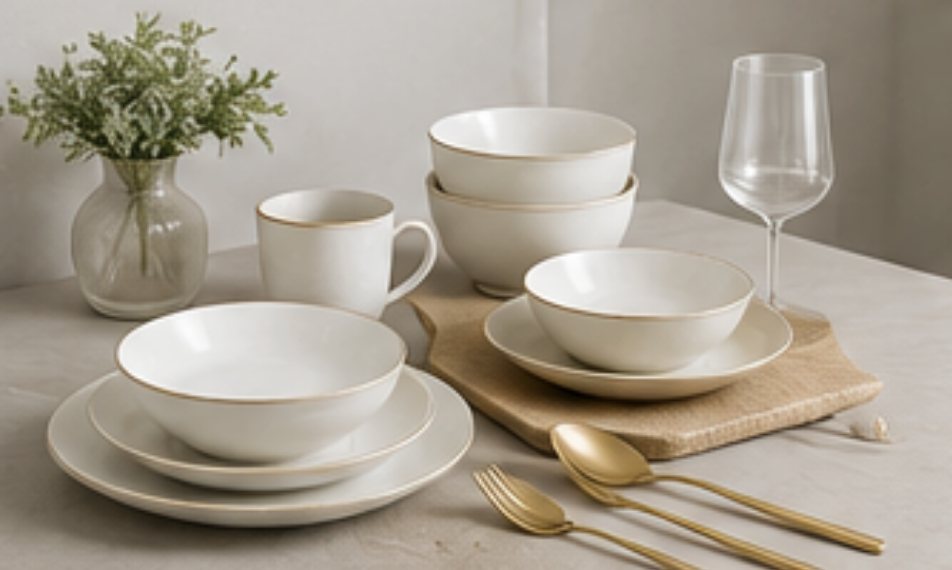
Tableware can be divided according to how each item is used during food service.
| Tableware Category | Common Examples | Main Function |
|---|---|---|
| Dinnerware | Plates, bowls, side dishes | Holding individual food portions |
| Cutlery | Forks, knives, spoons | Eating and serving food |
| Drinkware | Glasses, cups, mugs | Holding hot and cold beverages |
| Serving ware | Platters, salad bowls, sauce boats | Carrying shared food |
| Beverage service | Teapots, coffee pots, jugs | Preparing and serving drinks |
| Table accessories | Napkin holders, coasters, trivets | Supporting the dining setup |
A complete table setting does not need every category. The correct combination depends on the meal, number of guests, restaurant style, and available storage space.
Dinnerware is one section of tableware rather than a completely separate concept.
A dinnerware set may contain dinner plates, side plates, soup bowls, dessert dishes, and serving bowls. These pieces are commonly made from porcelain, stoneware, earthenware, glass, melamine, or metal.
Tableware includes dinnerware plus the utensils, glasses, serving tools, and accessories placed around it.
For a restaurant or hotel buyer, tableware planning may therefore involve several coordinated product groups rather than one set of plates.
Different materials provide different combinations of weight, appearance, impact resistance, heat tolerance, and maintenance needs.
Porcelain and ceramic are widely used for plates and bowls because they provide a smooth surface and a broad range of colors and decorative finishes.
Chipped pieces should be removed from service because exposed edges can become sharp and difficult to clean.
Glass is commonly used for drinkware, dessert dishes, and serving bowls.
Rapid temperature changes and contact with hard sink surfaces can increase breakage risk, especially when an item already contains a small chip or hairline crack.
Stainless steel is used for cutlery, serving trays, bowls, and selected food-service containers.
It is practical for repeated cleaning, but it should still be rinsed and dried correctly to reduce mineral spots and detergent marks.
These materials are lightweight and useful in cafeterias, outdoor dining, schools, and casual restaurants.
They should be inspected for deep scratches, distortion, or damaged surfaces that may make effective cleaning more difficult.
Clean tableware should be stored in a dry area protected from dust, splashing, and unnecessary handling.
Plates should be stacked evenly without excessive weight. Glasses require enough separation to prevent contact, while cutlery should be completely dry before entering drawers or storage containers.
Commercial kitchens should organize clean and dirty tableware in separate zones to reduce cross-contact during service.
The sink is an important part of tableware handling because dishes move through scraping, washing, rinsing, and drying around this area.
A suitable basin should provide enough depth and width for plates, bowls, and cookware without forcing users to stack fragile items too high.
A Handmade Kitchen Sink can be developed with bowl dimensions, drain positions, corner radii, and accessories selected for a specific kitchen layout.
Deep bowls provide more room for washing large serving dishes, while double-bowl designs allow users to separate different cleaning tasks.
The sink alone does not determine hygiene. Cleaning procedures, detergent selection, water quality, drying methods, and staff practices remain equally important.
We specialize in manufacturing Stainless Steel Sinks for kitchens. Our product range includes Handmade Sinks, standard stainless steel sinks, and newly developed sink models.
Our production facility integrates product development, design, manufacturing, and quality control. Different dimensions, bowl layouts, surface finishes, drainage positions, and packaging methods can be discussed for wholesale and project orders.
Developing kitchen products for apartments, hotels, restaurants, cabinet suppliers, or retail channels?
Send us your required sink dimensions, bowl configuration, installation method, steel thickness, finish, accessories, packaging standard, and purchasing quantity. We will prepare a suitable Handmade Kitchen Sink proposal.