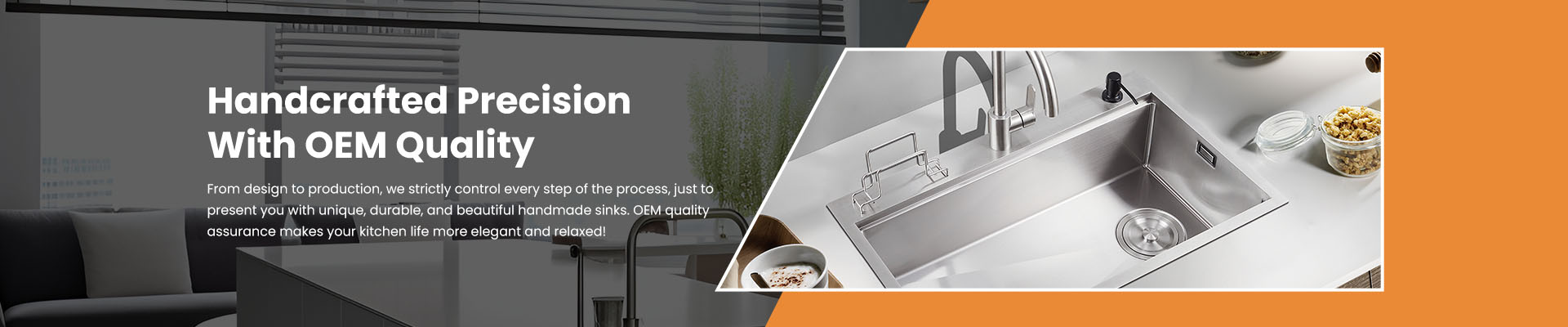
Stainless Steel Sinks are durable, but incorrect cleaners, chloride exposure, embedded iron particles, standing residue, severe impact, and poor installation can damage their finish or shorten their service life. Even a high-quality 304 Stainless Steel Kitchen Sink is not completely immune to scratches, discoloration, localized corrosion, or deformation.
Most sink damage develops gradually. Recognizing the causes early is more effective than trying to restore a badly marked or corroded surface later.
Stainless steel resists corrosion through a chromium-rich passive surface layer. Strong chloride exposure can disrupt this protective film, particularly around scratches, welds, crevices, and areas where liquid remains trapped.
Do not leave concentrated bleach, hydrochloric acid, drain opener, oven cleaner, or unknown chemicals inside the bowl. When a cleaner is approved for stainless steel, use its stated dilution and contact time, then rinse thoroughly.
Never mix bleach with ammonia or acidic products. Such combinations can release dangerous gases and create a serious health risk.
Rust-colored marks on a stainless steel sink do not always mean the sink itself has failed. Steel wool, carbon-steel tools, metal filings, and rusting cookware can deposit free iron on the surface. Those particles subsequently corrode and produce orange stains.
Avoid ordinary steel wool and unverified metal brushes. During installation, keep grinding dust and construction debris away from the bowl. Stainless steel should be cleaned with a soft cloth, nylon brush, or non-abrasive sponge.
A Brushed Stainless Steel Sink has fine directional lines. Aggressive scrubbing across those lines may create visible cross-grain scratches and an uneven reflection.
Clean in the direction of the grain wherever possible. Minor scratches are part of normal use, but repeated abrasive cleaning can create a patchy surface that is difficult to restore uniformly.
Our handmade stainless steel sinks are available with fine brushed, gun grey, and black titanium surface directions. Each finish requires its corresponding care instructions rather than one universal cleaning method.
Tap water can leave calcium and magnesium deposits after evaporation. These deposits are more visible in hard-water regions and may appear as pale spots or cloudy film.
Salt, acidic sauces, metal cans, wet cloths, and food scraps should not remain in the bowl for long periods. Rinse after use and dry the surface when water spotting is a concern.
A sink with correctly directed drainage can reduce residual water, but it cannot replace routine wiping. Cabinet level, drain installation, and bowl geometry also influence whether water remains behind.
Stainless steel tolerates normal kitchen temperatures, but placing extremely hot cookware directly into a cold wet sink can stress finishes and nearby accessories. Use a trivet rather than treating the bowl as a cooling surface.
Heavy cast-iron cookware can dent thinner steel or damage the drain area when dropped. Sink grids reduce direct contact but do not make the bowl impact-proof.
An unsupported sink can flex, separate from the countertop, or place stress on plumbing connections. Undermount models require suitable mechanical support and should not rely on sealant alone.
An incorrectly sized cutout, uneven cabinet, overtightened clips, unsupported faucet deck, or misaligned drain may create long-term problems. Installation instructions and the approved drawing should be reviewed before countertop fabrication.
We manufacture 304 stainless steel sinks using in-house processing at our approximately 70-acre production facility in Taishan, Guangdong. Our product scope includes handmade and formed sinks, single and double bowls, customized sizes, and several finishes.
As a reliable export supplier of 304 Stainless Steel Kitchen Sinks, we review material, sheet thickness, bowl dimensions, welding, surface treatment, drainage, accessories, and export packaging. Our stated production capacity reaches up to 100,000 sets per month, supporting repeat orders for distributors and kitchen projects.
Quality manufacturing reduces avoidable defects, but end users still need accurate care guidance. Private-label packaging should therefore include finish-specific cleaning instructions and chemical warnings.
Use mild detergent, warm water, and a soft cloth for daily cleaning. Rinse chemical residue, remove food promptly, dry the bowl when necessary, and keep carbon-steel particles away.
A stainless steel sink is most likely to retain its appearance when material selection, fabrication, installation, and maintenance are treated as one complete system.