
The title may sound playful, but in the commercial sink market, the real question is serious: what should buyers actually think about when choosing a sink for high-use kitchens, project installations, and long-term supply programs? For most professional buyers, the answer starts with material stability, usable bowl space, installation fit, finish consistency, and whether the sink can hold up under repeated daily cleaning. That is exactly where a simple handmade Stainless Steel Kitchen Sink becomes relevant.
In a commercial setting, a sink is not just a place to rinse dishes. It affects workflow, cleaning speed, counter layout, and the daily experience of the user. If the bowl is too shallow, the workspace feels limited. If the corners are poorly made, cleaning becomes slower. If the structure feels weak, long-term confidence drops quickly.
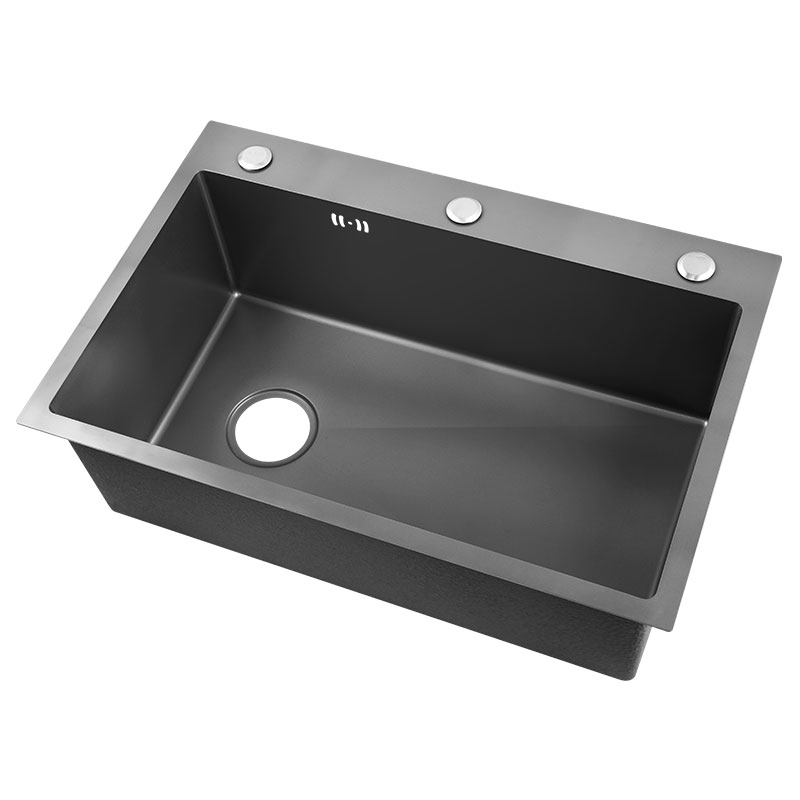
That is why many buyers look closely at Handmade Sink construction. The product range on the site describes the sink as hand-welded and formed from 304 stainless steel, with clean internal lines and a structure designed for stable daily operation. A handmade structure is often preferred when buyers want a more defined bowl shape, cleaner geometry, and stronger visual quality than many basic stamped alternatives.
When buyers ask what they should be thinking about in commercial sink selection, material is usually near the top of the list. A sink deals with water, detergent, cookware contact, food residue, and repeated impact every day. If the material is weak, the problem does not stay small for long.
This product line uses 304 stainless steel, and the site also notes an approximate composition of 18% chromium and 8% nickel, along with 72 hours of salt spray testing without significant corrosion for the comparable handmade single bowl model. Those details matter because they give buyers a clearer basis for judging corrosion resistance and long-term stability rather than choosing only by appearance.
A simple handmade Stainless Steel Kitchen Sink is often chosen not because it is flashy, but because it gives better control over details that matter in real use. Straight lines, cleaner corners, and a more refined bowl profile make the sink easier to integrate into modern kitchens. That matters in project supply, especially when builders, developers, or brand buyers want a product that looks clean and performs consistently.
The product pages repeatedly position these sinks as suitable for users seeking a higher-quality kitchen experience, with a simple design that fits a range of kitchen layouts and styles. For commercial-minded buyers, that flexibility is important. A sink that works across more countertop concepts is easier to specify, stock, and resell.
Professional buyers are rarely focused on one issue alone. They usually care about whether the sink can be customized, whether batch quality stays stable, whether the finish matches the intended market, and whether the size works for real installations.
That concern shows up clearly in this product range. The site lists ODM/OEM support, custom sizing such as 68 × 45 cm or custom, and multiple finish directions including brushed, gun grey, and black titanium on related handmade sink models. For importers and project buyers, this is practical value. It means the sink is not limited to a single off-the-shelf format and can be aligned more easily with different channel needs.
In commercial and semi-commercial kitchens, the finish affects more than looks. It influences scratch visibility, cleaning feel, and how the sink performs in daily maintenance. A sink may have acceptable material, but if the finish is inconsistent or difficult to maintain, customer satisfaction can still fall.
The site highlights fine brushed and nano-finish options on related handmade models, showing that finish treatment is part of the product value, not just decoration. For buyers building a premium sink line, this matters because visible quality often shapes first impressions before the user even starts working at the sink.
So, what are you “sinking” about commercial? In practical terms, you should be thinking about how a sink performs after installation, not just how it looks in a catalog. A simple handmade stainless steel kitchen sink connects naturally to that question because it focuses on the things commercial-minded buyers usually care about most: durable 304 stainless steel, handmade forming, clean structure, and flexible supply potential.
That makes the product more than a simple kitchen fixture. It becomes a specification choice for buyers who want a sink that fits modern kitchens, supports repeat use, and reduces the chance of later complaints about corrosion, weak structure, or poor finish consistency.
When thinking about commercial sink selection, the right focus is not only price. It is material, structure, finish, fit, and supply reliability. A handmade Stainless Steel Sink answers that need well because it combines a cleaner design language with the durability expectations buyers usually have for serious kitchen use.
A simple handmade stainless steel kitchen sink is a practical choice for buyers who want a more refined sink with stable material and flexible project potential. If you are comparing sink options for distribution, OEM programs, or kitchen projects, feel free to contact us. We can help you review sizes, finishes, and suitable solutions for your market.