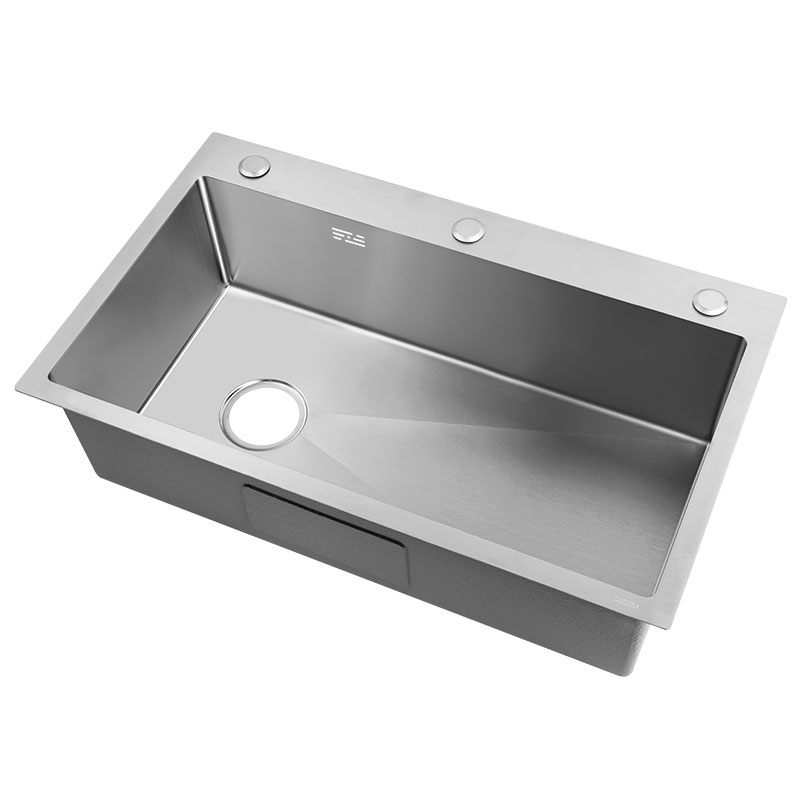
A stainless steel drainboard kitchen sink is not difficult to sell when the finish looks clean and the structure fits kitchen projects. The real problem often starts before installation. During export shipping, long sink bodies, extended drainboard areas, exposed rims, and brushed surfaces can be damaged by pressure, vibration, carton collapse, or poor inner protection.
For kitchen sink importers, project buyers, hardware wholesalers, and renovation suppliers, packaging is not just a shipping detail. It decides whether the sink can pass arrival inspection, reach the jobsite without deformation, and install smoothly without extra claims.
Drainboard sinks are usually longer than standard single bowl sinks. The extended drying area creates more surface space, but it also increases the risk of bending during transport. If the carton is weak or the inner support does not hold the rim properly, the sink edge may arrive uneven.
This becomes a serious issue during installation. A slightly bent rim can affect countertop fitting, sealing, and visual acceptance.
Stainless Steel Sinks with brushed, gun grey, black titanium, or other visible finishes need more careful surface protection. During sea freight or warehouse handling, sinks may rub against foam, cardboard, accessories, or other metal parts.
Small scratches may look minor in a warehouse, but they become obvious under kitchen lighting after installation.
Export cartons may face container stacking, warehouse movement, forklift handling, and long storage. If the outer carton is not strong enough, the pressure transfers directly to the sink body.
For a large stainless steel sink, carton strength should match sink size, weight, loading method, and transport distance. A standard box may not be enough for long drainboard structures.
The bowl area needs stable support. If the sink moves inside the carton, the rim and corners may hit the packaging wall repeatedly. This can cause dents, surface marks, or deformation around the installation edge.
Inner foam, corner guards, and fixed-position packing help reduce this movement during export shipping.
Clips, drains, screws, and small fittings should not move freely inside the same package. If accessories rub against the sink surface, they may scratch the visible finish before the buyer opens the carton.
For bulk orders, accessory bags should be separated, fixed, and clearly placed.
Importers need fast inspection after receiving goods. When cartons are damaged, labels unclear, or sinks poorly protected, warehouse teams must spend more time opening, checking, sorting, and reporting issues.
This slows down delivery to contractors, retailers, or project sites.
For a stainless steel drainboard kitchen sink, the rim and edge condition are especially important. If the sink cannot sit flat on the countertop, installers may refuse to continue. Even if the bowl is usable, a damaged rim can still delay the job.
This is why packaging should protect the installation contact area, not only the visible bowl.
Once a sink is damaged during export, the buyer may need replacement, discount negotiation, photo evidence, claim handling, or urgent local sourcing. The cost is often higher than improving packaging at the beginning.
For project buyers, damaged sinks also affect handover timing.
OUWAYS handmade stainless steel sinks can support standard and custom sizes, with 304 stainless steel and multiple surface finish options. For export buyers, custom size should always be reviewed together with carton structure, foam support, and pallet loading.
The larger or longer the sink, the more important the packing design becomes.
Buyers should confirm whether the sink surface is protected with film, foam, bagging, or other anti-rub materials. For brushed and colored finishes, surface protection should be stronger than for ordinary utility sinks.
Clear labels help warehouses sort goods faster. Carton marking should show model, quantity, finish, direction, and handling notes. For long-size sinks, pallet planning can reduce bending and edge pressure during loading.
Before large shipment, buyers can ask for sample packing pictures or packing tests. This is useful when ordering sinks with drainboard areas, special finishes, custom dimensions, or export-sensitive surfaces.
A good sink can still become a failed shipment if the packaging is not planned properly. Buyers should discuss packing method at the same time as material, finish, size, and installation accessories.
Retail buyers may need cleaner outer boxes and easier warehouse handling. Project buyers may care more about pallet strength, batch labeling, and site delivery sequence. The same sink may need different packaging plans for different sales channels.
Importers should record which damage appears most often: bent rim, scratched surface, crushed corner, loose accessory, damaged carton, or missing parts. These records help suppliers improve the next shipment instead of repeating the same problem.
Export damage is not only a logistics problem. It affects inspection speed, installation quality, buyer confidence, and project delivery. For kitchen sink distributors, contractors, importers, and hardware wholesalers, the safest approach is to review packaging before the sink leaves the factory.
If your business needs a stainless steel drainboard kitchen sink or handmade stainless steel sink supply for renovation, retail, apartment kitchens, or project orders, share the sink size, finish, packing requirement, loading method, and shipment quantity before production. Our team can help review rim protection, surface protection, accessory packing, and carton structure to reduce scratches, dents, deformation, and claim risk.
To learn more about our stainless steel sink supply, surface finishes, and export packaging support, please visit our official website: https://www.ouways.com/