
Copper sinks develop a living surface that changes with water, air, food, and cleaning habits. Over time, the color may darken, lighten, or form an uneven patina.
This change is normally part of the material’s character rather than a sign that the sink is dirty. Cleaning should remove food, grease, and soap residue without stripping the finish unnecessarily.
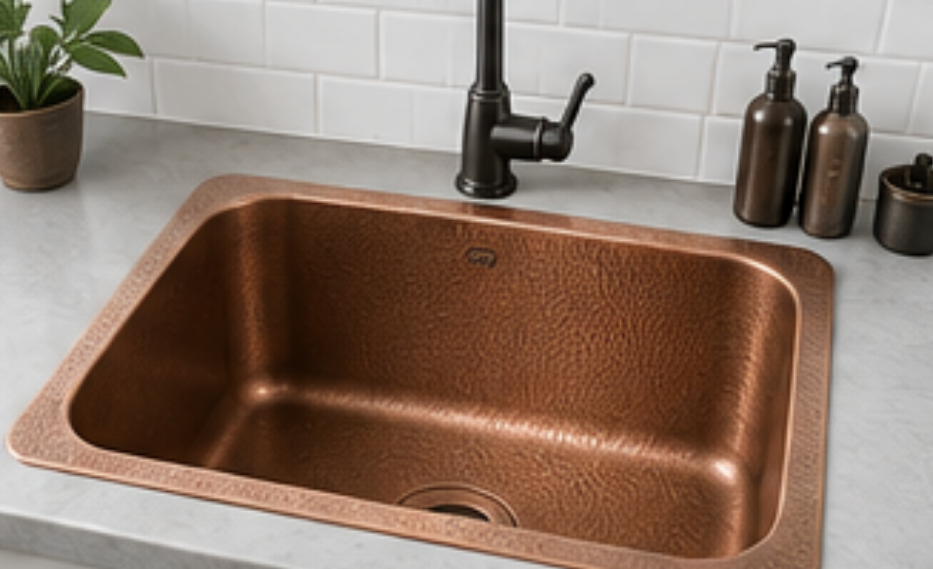
Rinse the sink with warm water after use.
Apply a small amount of mild dishwashing liquid to a soft sponge or microfiber cloth. Wipe the complete bowl, including the base, side walls, corners, rim, and drain area.
Rinse thoroughly and dry the surface with a soft cloth.
Water droplets may leave mineral marks, especially in hard-water areas.
Drying also helps the user distinguish between removable residue and the natural color variation of the copper.
Do not use steel wool, coarse scouring pads, metal scrapers, or aggressive polishing powder.
These tools can create scratches and remove the patina unevenly.
A soft-bristled brush can help clean around the drain, embossed details, and tight corners.
Avoid sharp tools that may damage sealant or leave permanent marks.
Bleach, ammonia, acidic toilet cleaners, oven cleaner, and harsh descaling products may alter the copper surface.
Even natural acids such as lemon juice and vinegar can brighten copper by removing oxidation. This may be desirable when restoring bare copper, but it can create a bright patch on a sink intended to retain its aged patina.
Some copper sinks have a protective coating, wax, or factory-applied finish.
Cleaning products suitable for unfinished copper may damage a sealed surface. Follow the sink manufacturer’s care instructions before using polish or acid-based products.
Remove tomato sauce, citrus juice, vinegar, salt, and other reactive food residue soon after use.
Rinse the area with water, wash it gently with mild detergent, and dry it. Leaving acidic or salty materials on the surface may cause a noticeable color change.
A natural copper patina may gradually become more even through regular use.
Avoid polishing one small area repeatedly, as this can create a bright spot that contrasts with the rest of the bowl.
When a complete restoration is needed, use a product intended for the specific copper finish or consult a professional refinisher.
A simple routine is usually enough:
Rinse after food preparation
Wash with mild detergent
Use a soft cloth or sponge
Remove acidic residue promptly
Dry after cleaning
Avoid abrasive tools
Follow the manufacturer’s finish instructions
Copper is selected for its warm appearance and changing patina. Stainless steel provides a more neutral metallic finish and generally does not develop the same type of natural color variation.
A Stainless Steel Kitchen Sink may be more suitable for buyers who want a consistent modern appearance, broad compatibility with kitchen designs, and straightforward routine cleaning.
Stainless steel still requires proper care. Chlorine exposure, hard-water deposits, iron contamination, and cross-grain scrubbing can affect its finish.
We manufacture handmade and standard Stainless Steel Kitchen Sinks in different bowl structures and sizes.
Our factory emphasizes stainless steel material selection, controlled in-house production, manual and semi-automatic lines, and quality inspection. Buyers can discuss custom dimensions, installation types, finishes, and packaging according to their markets.
Copper and stainless steel serve different design and maintenance preferences.
Distributors and project buyers should consider appearance, cleaning habits, water quality, kitchen style, price positioning, installation method, and after-sales expectations before selecting a material.
Sourcing alternatives to copper sinks for residential, hotel, or retail kitchen collections?
Send us your preferred bowl size, steel thickness, corner radius, finish, mounting method, drainage position, accessories, and order volume. We will prepare a Stainless Steel Kitchen Sink proposal for comparison.