
A three-compartment sink is commonly used in food-service operations when plates, utensils, cookware, and preparation tools must be cleaned manually.
The basic sequence is:
Wash
Rinse
Sanitize
Air-dry
Each compartment has a separate purpose. Mixing the stages or moving dirty items directly into sanitizing solution can reduce the effectiveness of the complete process.
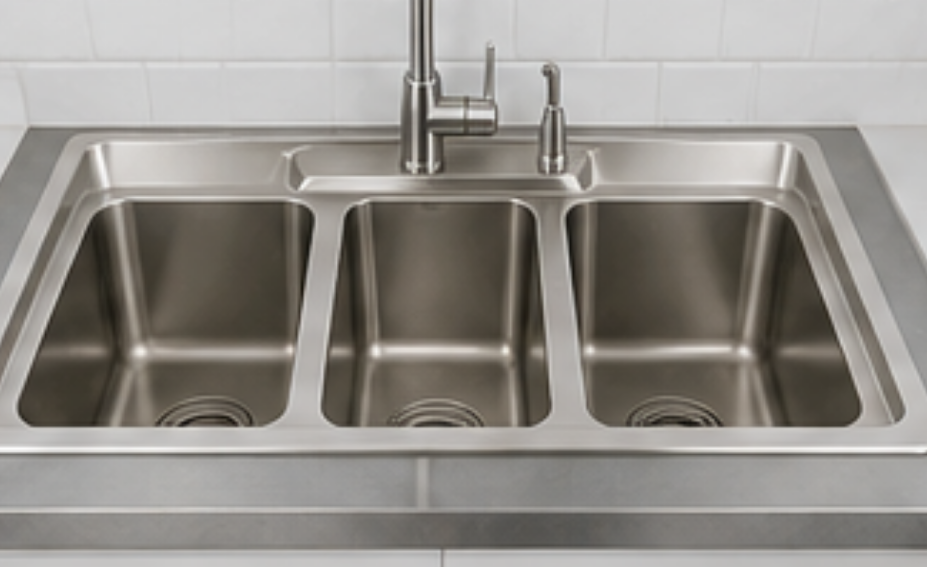
Before filling the sink, clean and sanitize the sink bowls, drainboards, and nearby work surfaces.
Remove unrelated items so the washing area is used only for tableware during the cleaning process.
Remove leftover food into a suitable waste container.
Separate sharp tools, glasses, plates, cutlery, and heavily soiled cookware. Pre-soaking may help loosen dried food, but it should not replace the washing stage.
Water temperature, sanitizer type, concentration, contact time, and testing procedures can vary by local regulations and chemical products.
Follow the sanitizer label and the requirements of the relevant local authority. Use the correct test strips when a chemical sanitizer is used.
Fill the first compartment with clean water and an appropriate food-service detergent.
The water should be maintained at the temperature required by the detergent instructions and local code.
Wash the front, back, edges, handles, corners, and recessed areas of each item.
Replace the wash water when it becomes greasy, heavily soiled, or too cool to work effectively. Continuing with dirty water can transfer residue to other items.
The second compartment removes detergent, loosened food, and remaining wash-water residue.
Immerse or rinse the tableware thoroughly using clean water. Detergent left on the surface can interfere with some sanitizers.
Replace the rinse water when it becomes cloudy or contaminated.
Do not place dirty utensils directly into the rinse sink, as this bypasses the washing stage.
The third compartment contains hot water or an approved chemical sanitizing solution, depending on the operation and local requirements.
Every food-contact surface must remain in contact with the sanitizing method for the required period.
Too little sanitizer may not provide the intended result, while excessive concentration may create residue, damage materials, or expose staff to unnecessary chemicals.
Use test strips matched to the selected sanitizer. Do not estimate the concentration by color or smell.
Never combine chlorine products with acids, ammonia, or other incompatible chemicals.
Mix sanitizing solution only according to its label and workplace procedure.
Place sanitized tableware on a clean, protected drainboard or rack.
Do not dry it with a used towel because the towel may transfer microorganisms or lint back onto the cleaned surface.
Allow water to drain and air to circulate before stacking plates, bowls, or containers.
Moisture trapped between items can delay drying and create an unsuitable storage condition.
A three-compartment system is not effective when the water and work surfaces remain dirty.
Monitor:
Wash-water cleanliness
Rinse-water clarity
Sanitizer concentration
Required contact time
Drainboard cleanliness
Availability of test strips
Separation of clean and dirty items
A Three Compartment stainless steel sink should provide enough bowl capacity for the largest regularly washed item.
Commercial buyers should consider bowl dimensions, overall length, drainboard position, backsplash height, leg structure, drain location, and available installation space.
Our current website primarily presents handmade and Stainless Steel Kitchen Sinks. For customized multi-bowl requirements, buyers can submit drawings and technical specifications for manufacturing review.
Our facility uses advanced machinery and multiple manual and semi-automatic production lines.
We manage material selection, forming, welding, finishing, inspection, and packaging within the production process. This supports customized sink projects and repeat purchasing for international customers.
Planning a dishwashing area for a restaurant, canteen, hotel, bakery, or institutional kitchen?
Provide the required bowl dimensions, sink length, drainboard arrangement, backsplash height, steel specification, leg structure, plumbing positions, and quantity. Our team will review your Three Compartment Stainless Steel Sink requirements.
Previous: How To Clean Copper Sinks?
Next: What Is Tableware?